China's Africa Mining Advantage Isn't Capital, It's People
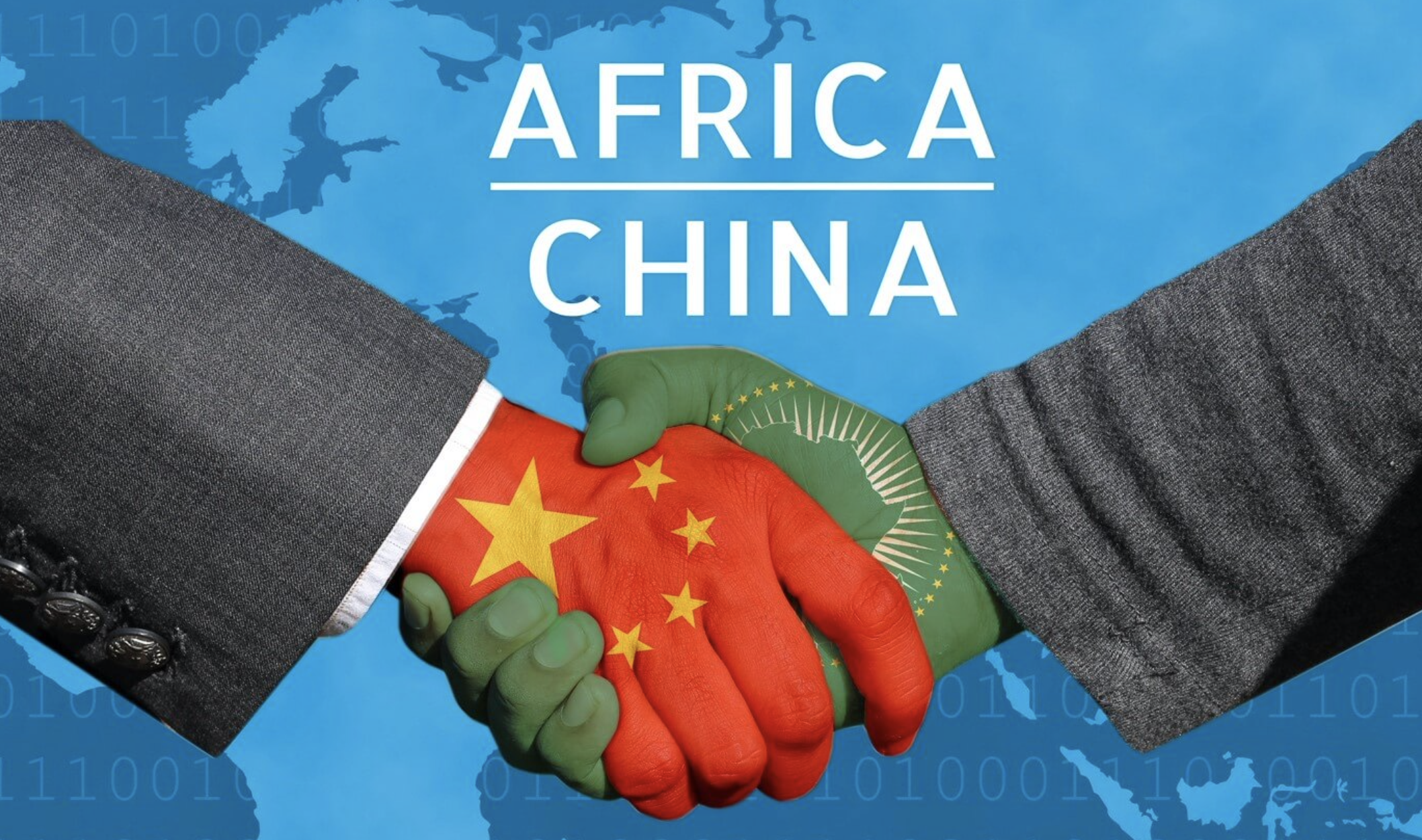
Early, embedded presence and hard-won commercial terrain has defined Beijing's extractive advantage © RTK
❮ VSG News
▦ OPINION | Arno Saffran, Tue 02 Dec, 2025Beijing’s real advantage isn’t just ownership—it’s the people who operate in the spaces Western firms can’t reach.
Today there is a serious global contest for critical minerals, the story we tell ourselves is one of dominance and dependence. China controls most of the world’s processing capacity for lithium and cobalt. It has spent decades locking up supply through debt, diplomacy, and direct investment. The West, having slept through the acquisition phase, is now scrambling to build its own alliances and supply chains.
The Minerals Security Partnership is the geopolitical answer. But this familiar narrative misses the deeper, more human layer of China’s advantage—one that no policy pact can quickly replicate.
The Human Layer of Strategic Advantage
China’s real edge in global mining isn’t just its state-backed capital or its long-term planning. It is its deep bench of operational personnel who have spent a generation learning to work in the very environments where Western firms consistently falter: high-risk jurisdictions, under opaque regulatory regimes, within complex local political economies.
While Western miners were optimizing for quarterly returns in stable democracies, Chinese firms were sending their people to the Democratic Republic of the Congo, to Papua New Guinea, to Myanmar—not just to invest, but to embed.
The Hybrid Operator
These individuals are a distinct class. They are not just engineers or financiers. They are hybrid operators, comfortable in the zone where commercial activity meets state interest and local power structures. Their mandate is not merely to run a mine efficiently, but to ensure its continuity amidst shifting political winds, community unrest, and bureaucratic obstruction.
They succeed not because they are more ethical or less ethical than Western counterparts, but because they are often more adaptive. They operate with a different tolerance for ambiguity and a different toolkit for building the necessary social and political capital on the ground.
A Tale of Two Methods in Central Africa
Consider Central Africa. A Western mining executive arrives with a world-class feasibility study, an ESG framework vetted by London, and a rigid corporate compliance protocol. They meet a provincial governor who expects flexibility. The deal stalls.
A Chinese counterpart, backed by similar technical expertise, arrives with a different kind of capital: a longer time horizon, an understanding that the governor’s priorities might include building a road to his hometown, and the operational understanding to make that happen within the project’s broader economics. The mine proceeds. This is not a story about corruption. It is a story about method.
The Chinese approach starts from a realism many Western boardrooms still miss: in many frontier markets, the official tender isn’t the starting gate—it’s the finish line. The real work happens long before that, in the tangle of relationships, unspoken understandings, and quiet stakeholder alignment. Their people are chosen not just for technical skill, but for their ability to move confidently in that pre-commercial zone.
Western firms, built for transparent jurisdictions, and rightly so, tend to treat that same terrain as something radioactive—a risk to be cordoned off rather than a landscape to be mapped. That’s not a moral failing; it’s an adaptive one. And it creates a familiar asymmetry: one side plays by the published rules, while the other has already shaped the rules before they appear.
None of this is accidental. It’s a discipline: deep local intelligence, long bets on relationships, and the patience to sit with ambiguity until it gives way. It requires a level of contextual fluency and operational grit that’s still rare in Western leadership teams accustomed to quarterly certainty. The real gap isn’t money or technology; it’s a particular kind of human capital—the kind that can operate where the map thins out and the real terrain begins.
The Asymmetry of Solutions
This creates a fundamental asymmetry. The West is now trying to build alternative supply chains through top-down alliances between governments. But those alliances run aground on the same old rocks: local politics, community distrust, and bureaucratic friction. We are trying to solve a ground-level, human problem with a capital-level, diplomatic solution. The question is not whether the West can find new deposits—it can. The question is whether it can develop and deploy the people who can secure and operate them in the world as it exists, not as we wish it to be.
The Scarcity of the Right Profile
These people are scarce. They require a rare blend of gritty operational resilience, geopolitical savvy, and the commercial intellect to structure deals that are both profitable and durable. They are not produced by our standard MBA pipelines, which prioritize analytical rigor over contextual intelligence. They are forged in the field, often in postings that our own corporate risk departments would now forbid.
Not a Pact
The strategic imperative, then, is clear. If the West is serious about mineral security, it must get serious about personnel security. It must consciously build a cohort of its own hybrid operators—individuals who can match China’s ground-game, not with imitation, but with a more transparent, accountable, yet equally sophisticated form of engagement. This means valuing and promoting executives whose careers show time in difficult posts. It means granting them the strategic patience and operational latitude to build legitimacy, not just efficiency. It means recognizing that the most critical investment in a mining venture today may not be in the drilling rig, but in the person who knows how to secure its social license.
Paper Chains vs. Ground Truth
China didn’t just buy the mines. It sent its people to learn the terrain. The West can draft all the pacts it wants, but until it learns to respect and master that same human terrain, its supply chains will remain fragile—built on paper, not on the ground.
References:
U.S. Department of State. Announcing the Minerals Security Partnership. Link to the official release to ground it in statecraft.
Harvard Kennedy School, Mossavar-Rahmani Center for Business and Government. How China's 'Belt and Road' Is Building Influence Through Local Elites*. Research on how BRI functions through social and political capital.
Carnegie Endowment for International Peace. How Chinese Companies Have Adapted to Africa's Political Terrain. A nuanced report on how Chinese firms build local political knowledge.
How relevant and useful is this article for you?
★ 28
ABOUT THE AUTHOR(S)
— Arno Saffran
Arno developed his approach through roles in client development (KPMG) and strategic commercial engagement (affiliated with advisories including Hakluyt), focusing on complex industrial and energy sectors.
VSG works across the extractive value chain, positioning people who form the critical bridge to early-stage relationships and commercial access in complex markets.