Frontier Markets and Stakeholder Maps as Balance Sheet
❮ VSG News
▦ OPINION | Arno Saffran, Sat 01 Nov, 2025Influence as a strategic asset
In frontier markets, commercial success is rarely determined by technical capability alone. While balance sheets, contracts, and project plans capture visible value, the decisive factor often resides in human and political capital. At VSG, we conceptualize this as a stakeholder balance sheet—an actionable map of gatekeepers, veto players, and champions whose influence shapes whether projects advance, stall, or fail. For executives navigating high-value, high-context environments, understanding and managing these relational assets is as critical as managing financial ones.
The Logic of a Stakeholder Balance Sheet
Traditional business development approaches often treat stakeholder engagement as incidental. VSG treats it as strategically measurable and commercially relevant. Each individual in a market ecosystem—whether regulator, local leader, or informal advisor—represents a potential asset or liability. Some accelerate approvals, others block progress, while a select few drive momentum across networks.
By conceptualizing stakeholders as entries on a balance sheet, executives gain clarity: where resources should be allocated, which risks require mitigation, and which relationships can be leveraged to unlock commercial opportunity. In essence, human capital becomes visible, quantifiable, and actionable.
Gatekeepers, Veto Players, and Champions
Frontier markets feature multiple layers of influence.
Gatekeepers control information flows and access. Identifying them early allows a firm to navigate procedural bottlenecks before they materialize.
Veto players hold the power to halt or reshape projects. Understanding their motivations, constraints, and networks is akin to hedging a financial exposure.
Champions actively drive alignment and momentum. They convert strategic intent into operational reality and connect otherwise disconnected actors.
VSG’s frameworks map these roles without disclosing proprietary methods, ensuring that partners understand the human terrain while preserving the operational advantage.
Quantifying Influence for Strategic Decision-Making
The balance-sheet metaphor is more than a communication device—it is a management tool for executives. Quantifying influence allows leadership to:
Prioritise relationships that directly affect project outcomes.
Anticipate and mitigate risks posed by veto players.
Mobilise champions to accelerate approvals and build legitimacy.
Report relational “assets” in a form that boards and investors can understand.
By translating informal influence into structured intelligence, CEOs and CFOs can align relational strategy with commercial objectives, turning soft factors into measurable returns.
Turning Strategy into Action
A stakeholder map is only as effective as the people executing against it. At VSG, we deploy Territory Directors and senior operatives who convert mapped influence into actionable engagement. These leaders embody the firm’s balance-sheet position in the market, converting relational insight into tangible commercial outcomes. In high-context markets, the individual on the ground is the strategy in motion. Their presence ensures that the firm does not merely observe the market, but actively participates in it.
Operationalising Relational Assets
Effective frontier-market engagement requires consistent and disciplined execution:
Establish early presence to understand the relational ecosystem.
Engage discretely with key influencers before formal processes begin.
Map influence quantitatively, updating the “balance sheet” as relationships evolve.
Align internal capabilities and leadership deployment to the market’s human architecture.
This approach ensures that commercial intent is matched by operational capability, and that opportunities are pursued strategically rather than opportunistically.
Trust, Influence, and Commercial Value
In frontier markets, trust and influence are the ultimate currencies. Firms that treat stakeholder relationships as a quantifiable balance-sheet asset position themselves to capture opportunities, mitigate risks, and navigate complexity with precision. At VSG, this philosophy guides every engagement: enabling partners to enter markets not as outsiders guessing at local dynamics, but as participants with measurable, actionable insight into the human networks that determine commercial success.
References:
North, Douglass C. Institutions, Institutional Change and Economic Performance. Cambridge University Press, 1990.
Helmke, Gretchen & Levitsky, Steven. Informal Institutions and Democracy. Johns Hopkins University Press, 2006.
OECD. States of Fragility series, 2018–2024.
Harvard Kennedy School. The Practice of Adaptive Leadership. Heifetz, Grashow & Linsky, 2009.
RAND Corporation. Political Risk and Emerging Markets: Institutional and Leadership Factors, 2019.
Ghana oil & gas local content ecosystem study, 2024. ScienceDirect.
Rethinking resource enclavity in developing countries: Embedding Global Production Networks in gold mining regions,” 2023.
The Impact of the Petroleum Industry Act on CSR and Taxation in Nigeria’s Upstream Oil and Gas Sector,” 2023.
How informal institutions drive innovation: Insights from energy technology innovation systems in Latin America,” 2025.
How relevant and useful is this article for you?
★ 104
ABOUT THE AUTHOR(S)
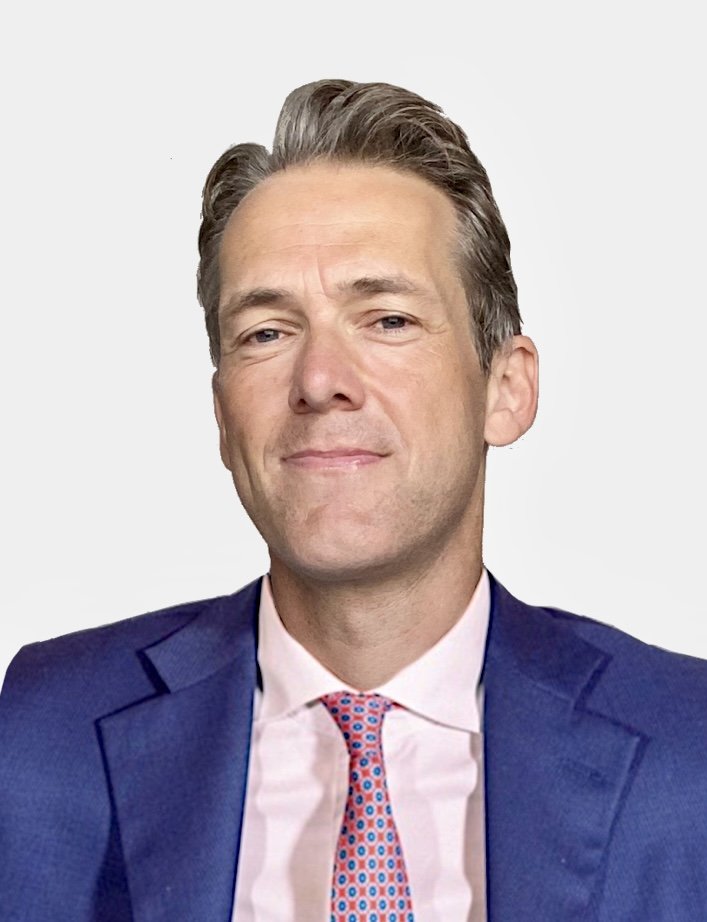
— Arno Saffran
Arno developed his approach through roles in client development (KPMG) and strategic commercial engagement (affiliated with advisories including Hakluyt), focusing on complex industrial and energy sectors.
VSG works across the extractive value chain, positioning people who form the critical bridge to early-stage relationships and commercial access in complex markets.